
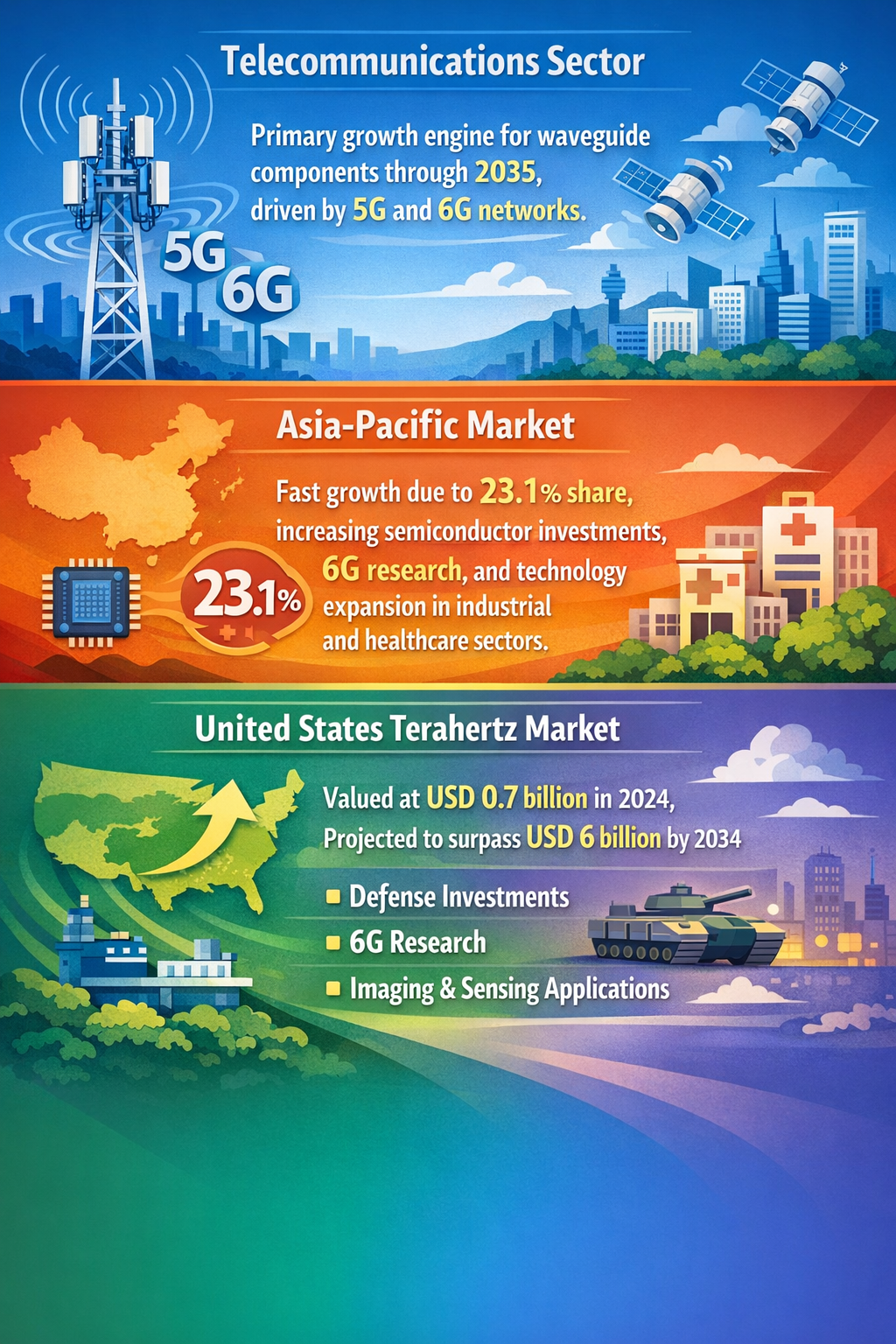
Satellite-First Network Architecture: The Under-Recognized Inflection in Global Connectivity
As 5G networks saturate terrestrial infrastructure and 6G looms on the horizon, a critical yet underappreciated shift is emerging: the integration of Low Earth Orbit (LEO) satellite and Mobile Satellite Services (MSS) as primary, rather than ancillary, components of global network architecture. This shift could redefine capital flows, regulatory frameworks, and industrial structures within telecommunications and adjacent sectors over the next two decades.
While much attention has focused on AI-native 6G, mmWave deployments, and terrestrial 5G densification (IndexBox 14/04/2026; The Art of CTO 12/04/2026), a foundational integration of LEO/MSS into core network architectures—embedding satellite paths as first-class citizens—is increasingly credible (The Art of CTO 05/04/2026). This weak but structurally significant inflection could reshape how capital is allocated, how regulatory domains adapt, and how industrial competition unfolds between traditional telcos, satellite operators, and cloud giants. Far from a mere technological add-on, the satellite-first ethos might dissolve long-standing terrestrial monopoly structures and regulatory silos over 5 to 20 years.
Signal Identification
This development is classified as an emerging inflection indicator. Although satellite internet services like Starlink are known, their evolving integration into 5G core networks, including policy, billing, roaming, and roaming interoperability, marks a systemic reconfiguration rather than a marginal improvement. It moves LEO/MSS from “bolt-on backhaul” to embedded foundational infrastructure (The Art of CTO 05/04/2026).
The plausibility band for this inflection is medium to high over a 10–20 year horizon, given current investment trajectories and nascent technical standards proposals. Exposed sectors include telecommunications, satellite manufacturing and launch services, cloud infrastructure, regulatory bodies, and downstream IoT and mobility services.
What Is Changing
Multiple converging trends provide the substratum for this shift. First, exponential growth in 5G infrastructure—set to generate over 44% revenue share in wireless networks by 2026—has pushed terrestrial spectrum and topology toward densification limits, necessitating alternative transmission paths (Persistence Market Research 22/04/2026).
Second, Amazon’s planned $200 billion capital expenditure in 2026 on AI infrastructure, custom silicon, and notably satellite internet signals a strategic bet on satellite networks as integral connectivity enablers beyond broadband into AI-enabled edge computing (247 Wall Street 11/04/2026). This level of capital commitment is anomalously large and targets a shift from terrestrial-only to hybrid satellite-cellular ecosystems.
Third, commercial satellite constellation tensions—exemplified by SpaceX accusing Amazon of conflicting orbital altitudes risking collisions—highlight the competitive stakes in controlling orbital “real estate” as connectivity backbone (Coaio 07/04/2026). This foreshadows industrial structural realignments similar to those once catalyzed by terrestrial fiber wars.
Fourth, the anticipated integration challenge where LEO satellites must be treated as first-class components in billing, policy, and roaming mechanisms within 5G cores indicates a deep architectural fusion that transcends patchwork solutions (The Art of CTO 05/04/2026). This is a structural systems engineering challenge that redefines traditional network boundaries.
Lastly, in a geopolitical context, government actions such as the Iranian regime’s targeted arrests linked to Starlink devices underline the growing national security implications of satellite internet as a critical communication layer—a threat and opportunity for state regulatory frameworks (ACLED Data 02/04/2026).
Disruption Pathway
Initially, the confluence of terrestrial network saturation, constrained spectrum resources, and accelerated LEO satellite deployments will spur telcos and cloud providers to incorporate satellite links natively into network cores. Early adoption may emerge in underserved or mobility-centric verticals such as shipping—where 75,000 vessels are slated for Starlink integration in 2026, potentially generating $1.9 billion—signaling commercial viability (Next Big Future 04/04/2026).
These early gains will expose challenges in seamless handover, billing, policy enforcement, and roaming synchronization, requiring new protocol standards and regulatory accommodations. As industry consortia and regulators accommodate these changes, incumbent telcos may resist, especially over spectrum rights and service definitions, causing regulatory tensions that may drive specialized legal innovation or market bifurcation.
As investment flows from dominant tech players and satellite operators expand, this can accelerate satellite constellation launches and integrated network deployments, increasing pressure on space situational awareness and traffic management frameworks, given congested orbits and collision risks. Failure to resolve these operational risks could trigger chain-reaction disruptions in connectivity services and insurance liabilities.
Once integrated satellite pathways achieve parity or superior performance for latency-sensitive, AI-enabled 6G traffic in difficult environments, customer migration may accelerate, eroding terrestrial monopolies, fragmenting market power, and forcing telecommunications standards and licensing authorities to broaden their mandates. This could precipitate a fundamental governance model shift, with hybrid terrestrial-satellite networks as norms and a new form of cross-domain regulatory oversight emerging.
Unintended consequences, such as geopolitical satellite conflicts or state censorship attempts leveraging satellite infrastructure, might further compel international coordination or catalyze bifurcated “connectivity blocs.” This, in turn, could recalibrate global capital flows toward satellite infrastructure, edge AI integration, and security resilience, rippling through supply chains from chip manufacturing to launch providers.
Why This Matters
Senior decision-makers face unprecedented interdependencies. Capital allocation strategies must evaluate satellite network infrastructure as a core asset class, shifting investment away from purely terrestrial rollouts (247 Wall Street 11/04/2026). Regulatory frameworks governing spectrum use, data sovereignty, and cross-border telecommunications policy are poised for substantial revision to accommodate satellite-first architectures.
Strategically, traditional telcos face disruption not only from new entrants but from cloud and space companies integrating downstream connectivity control and AI services, challenging legacy industrial structures (Coaio 07/04/2026). Supply chains may need reconfiguration around satellite manufacturing, launch cadence, and combined terrestrial-satellite equipment interoperability.
Liability and risk governance changes will likely follow as collision risks and signal interference concerns escalate, requiring new insurance and compliance products. National security frameworks will also tighten around satellite internet usage, impacting foreign policy and intelligence capabilities (ACLED Data 02/04/2026).
Implications
This integration may structurally reorient global connectivity markets away from terrestrial incumbents toward multi-modal, satellite-first network paradigms. It could enable ubiquitous connectivity in underserved regions, accelerating IoT ecosystem maturation and AI-enabled wireless paradigms referenced for 2026 and beyond (Engleish 01/04/2026). However, this should not be misconstrued as simple replacement of terrestrial systems; rather, it represents systemic hybridization with complex operational and economic trade-offs.
Alternative interpretations may view satellite integration as too costly or technologically premature, citing latency and spectrum interference as persistent barriers. Yet, mounting capital commitments and evolving architectures strongly indicate that this signal will not remain peripheral.
This shift might coincide and synergize with AI-native 6G overlays, making satellite connectivity a strategic enabler for next-generation wireless services rather than a standalone enterprise (The Art of CTO 12/04/2026).
Early Indicators to Monitor
- Formal standardization activities integrating LEO/MSS connectivity into 5G/6G core network protocols and policy frameworks.
- Capital expenditure announcements exceeding $100 billion in LEO/MSS projects beyond current commercial deployments.
- Regulatory filings or spectrum auctions reallocating frequencies explicitly for integrated terrestrial-satellite services.
- Vendor and carrier announcements about embedded satellite modules in consumer 5G devices or IoT platforms.
- Government security policy papers establishing satellite internet threat or resilience frameworks linked to connectivity governance.
Disconfirming Signals
- Regulatory roadblocks or international treaties limiting satellite constellation density or orbital altitudes.
- Failure to develop interoperable protocols that enable seamless billing, roaming, and policy integration.
- Major satellite collision or signal interference incidents resulting in prolonged service disruptions or public outcry.
- Significant technological breakthroughs in terrestrial 6G spectrum use that considerably mitigate the need for satellite integration.
- Dramatic reductions in capital expenditure or divestment by major satellite and cloud infrastructure players.
Strategic Questions
- How should capital allocation strategies adjust to account for hybrid terrestrial-satellite network infrastructures becoming mainstream?
- What regulatory frameworks are required to manage policy, spectrum, and security complexities emerging from integrated satellite-first architectures?
Keywords
Satellite-First Connectivity; LEO Satellites; 5G Integration; 6G Networks; Telecommunications Regulation; Capital Allocation; Network Architecture; Space Policy; AI Native Networks; IoT Ecosystems
Bibliography
- The telecommunications sector is the primary growth engine for waveguide components through 2035, driven by the dense deployment of 5G networks and the early groundwork for 6G. IndexBox. Published 14/04/2026.
- Network architectures will need to treat LEO / MSS as first-class citizens-integrated into 5G core, policy, billing and roaming-rather than bolt-on backhaul or niche services. The Art of CTO. Published 05/04/2026.
- Industry leaders and Nvidia emphasize that future wireless generations will be inseparable from AI, framing 6G as an AI-native network rather than just a faster radio standard. The Art of CTO. Published 12/04/2026.
- Amazon plans to spend approximately $200 billion in capital expenditures across Amazon in 2026, focused on AI infrastructure, custom silicon, and satellite internet. 247 Wall Street. Published 11/04/2026.
- About 75,000 shipping vessels are expected to add Starlink service in 2026, which could generate $1.9 billion. Next Big Future. Published 04/04/2026.
- Tensions escalate in orbit as SpaceX accuses Amazon of launching satellites into potentially conflicting altitudes, risking collisions with Starlink constellations. Coaio. Published 07/04/2026.
- At least eight arrest events specifically mention Starlink satellite internet devices, indicating the regime views satellite-based internet as a critical intelligence threat enabling strike coordination and information leakage. / Iran. ACLED Data. Published 02/04/2026.
- Leading Technology: 5G is anticipated to be the leading technology, accounting for over 44% of the revenue share in 2026, supported by its superior speed, capacity, and low latency capabilities. Persistence Market Research. Published 22/04/2026.
- In 2026, IoT ecosystems will become more integrated and intelligent. Engleish. Published 01/04/2026.