
Talent Exodus as a Structural Cybersecurity Inflection: The Underappreciated Threat to Global Cyber Defenses
Emerging workforce migrations in critical tech hubs could reshape global cybersecurity capacities far beyond immediate talent shortages. Sustained high-volume emigration from Israel, a leading center of cybersecurity, artificial intelligence (AI), and defense technology innovation, signals a fragile pipeline that may recalibrate capital flows, regulatory priorities, and industrial alliances worldwide.
The potentially enduring drain of 90,000 skilled professionals by 2026 represents more than a demographic fluctuation; it is a structural weak signal with repercussions for national and corporate cybersecurity strategy. This insight challenges prevailing assumptions that technological advancement alone suffices to maintain competitive positioning, highlighting instead the fragility of ecosystem talent foundations and the far-reaching consequences of geopolitical and socio-economic shifts.
Signal Identification
This development qualifies as a weak signal with high plausibility and a 5–10 year horizon. It signals an inflection point in cybersecurity labor sustainability due to sustained brain drain from a key global innovation node. The plausibility is high because the 90,000 emigration figure, if sustained or accelerated, will materially alter the availability of expertise in sectors reliant on cybersecurity, AI research, and defense technologies, especially in Israel but with global industrial impacts.
Exposed sectors include cybersecurity services and technology providers, national defense contractors, AI-driven innovation enterprises, and healthcare industries increasingly vulnerable to disruptive cyberattacks. Capital markets focused on cybersecurity startups and industrial automation digital security stand to be influenced by requisite shifts in talent allocation and supply chain resilience.
What Is Changing
Multiple intersecting developments highlight an emerging structural vulnerability. Israel’s reported emigration figure of approximately 90,000 skilled workers—including cybersecurity professionals—if sustained into 2026, could deplete a critical talent reservoir that sustains competitive advantage in cybersecurity and defense technology sectors (CES Intelligence 12/08/2026).
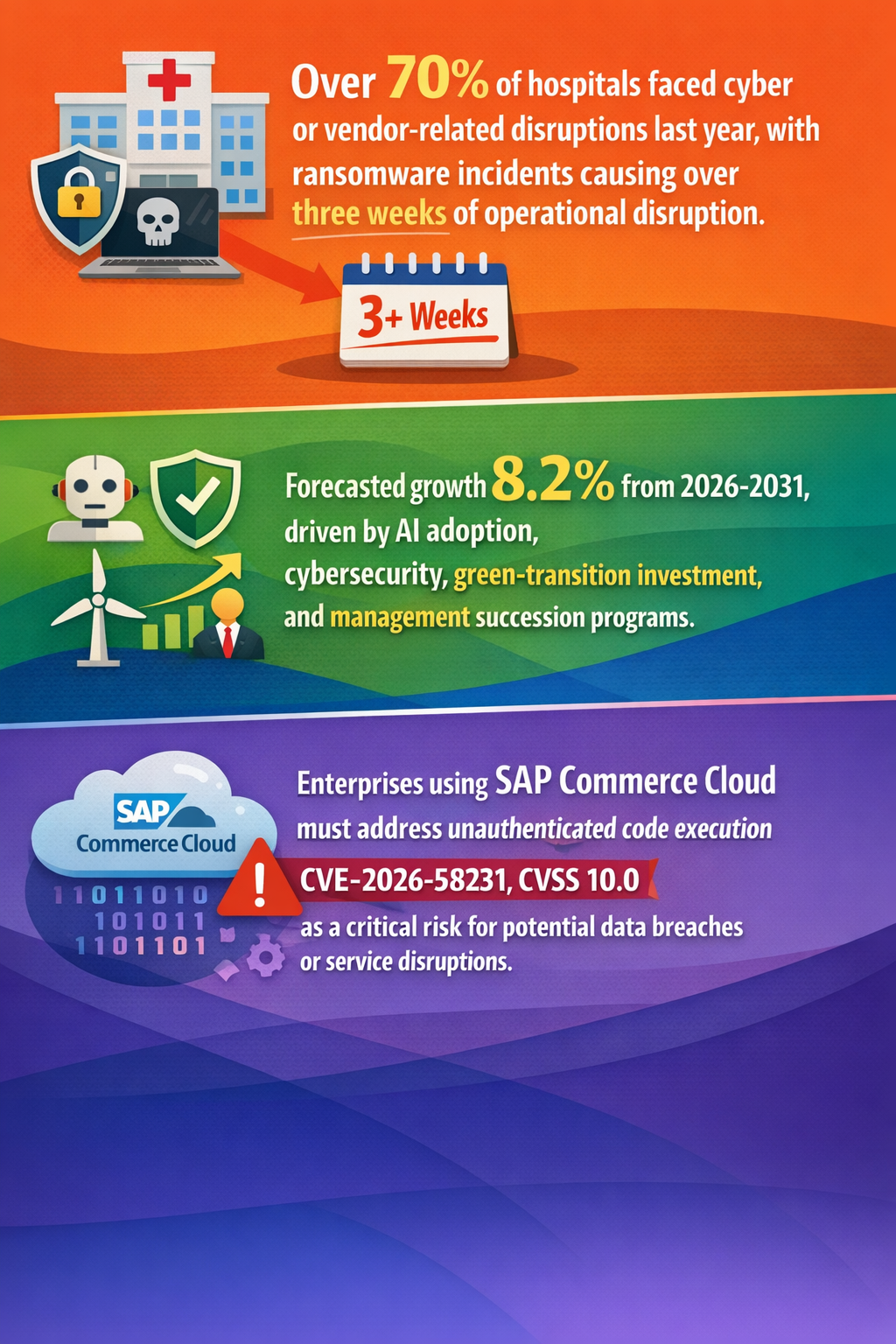
This talent vacuum compounds existing operational stresses observable in healthcare cybersecurity. Over 70% of hospitals experienced significant cyber disruptions in the past year, with ransomware attacks causing more than three weeks of operational downtime on average, signaling systemic fragility in critical infrastructure that relies heavily on cybersecurity expertise (RSM US Real Economy 03/08/2026). This fragility emphasizes the high stakes of talent availability for maintaining system and business continuity.
Meanwhile, industrial leaders such as Rockwell Automation are deploying sophisticated layered defenses like network segmentation and secure micro-perimeters, yet hinge their efficacy on skilled human oversight capable of configuring, managing, and evolving these defenses (Persistence Market Research 01/07/2026). The competition for this human capital intensifies as digital infrastructure complexity grows.
Adding to systemic risk, the emergence of unauthenticated code execution vulnerabilities in major enterprise platforms, exemplified by SAP Commerce Cloud’s CVE-2026-58231 vulnerability, exposes organizations to devastating breaches without requiring credential theft (Tech Maniacs 13/08/2026). The remediation and proactive defense increasingly demand high-specialty human capital—making talent shortages even more consequential.
Taken together, these observations underscore a substantive structural theme: the velocity and scale of cybersecurity talent migration create a systemic bottleneck that may undermine defensive innovation, disrupt operational continuity in critical sectors, and catalyze industrial restructuring toward alternative talent sourcing, automation, or regulatory intervention.
Disruption Pathway
This weak signal may evolve into structural change through several reinforcing mechanisms. First, if emigration sustains or accelerates, affected nations will face chronic shortages in cybersecurity expertise, diminishing their ability to innovate or operationally secure critical infrastructure. As the talent vacuum deepens, firms may ramp up investment in automated cybersecurity technologies, but these remain in nascent stages and cannot fully substitute advanced human cognitive skills required for nuanced threat hunting, vulnerability assessment, and incident response.
The competitive stress from talent scarcity will drive firms to intensify internal training programs, diversify hiring globally, and invest in remote collaboration tools—shifts that could gradually decentralize cybersecurity ecosystems. However, intellectual property risks and national security concerns may limit full globalization of sensitive talent.
Additionally, prolonged disruption and exposed vulnerability in sectors like healthcare may prompt regulators to impose stricter cybersecurity mandates and workforce standards. This regulatory tightening could escalate compliance costs, pushing organizations to consolidate services with vendors capable of meeting heightened requirements, thereby reshaping industrial structures and supplier landscapes.
Feedback loops may emerge: talent shortages lead to more cyber incidents, which induce regulatory pressure, inducing consolidation that raises barriers to entry and concentrates expertise within select large providers. This restructuring may marginalize startups or smaller entities unable to compete for scarce cybersecurity talent under tightened regulatory regimes.
Ultimately, dominant cybersecurity paradigms could shift from being primarily technology-driven to talent-driven, placing unprecedented emphasis on ecosystem workforce sustainability and demographic resilience. National investment strategies might evolve toward talent retention incentives, international partnerships, or even reshoring of cybersecurity capabilities as strategic imperatives.
Why This Matters
For capital allocators, this weak talent supply signal indicates a potential long-term bifurcation in cybersecurity investment risk. Firms heavily reliant on Israeli or similarly concentrated talent pools may face increased hiring costs, project delays, or scaled vulnerabilities. Capital may flow toward entities demonstrating diversified, resilient talent strategies or those pioneering automation-enhanced cybersecurity that reduces human dependency.
Regulators are likely to encounter mounting pressure to develop more explicit workforce standards, cyber certification requirements, and international talent cooperation frameworks to mitigate emergent national security and operational risk concerns.
From an industrial strategy perspective, governments and corporations need to reconsider the viability of current talent pipelines, potentially shifting toward policies that counteract brain drain or accelerate local capacity building.
Liability frameworks may evolve as operational disruptions attributable to talent gaps lead to increased litigation risks. Governance models will be tested on their agility to anticipate and adapt workforce-related cyber risks as critical vulnerabilities.
Implications
This development may compel sectors to reassess strategic positioning in cybersecurity over the next decade. It could catalyze accelerated industrial consolidation, increased automation adoption, and expanded regulatory intervention targeting human capital resilience.
Importantly, this is not a short-term cyclical issue or mere regional demographic anomaly but a structural signal demanding proactive strategic response. It might not simply be mitigated by technological innovation alone, given the complex cognitive demands of cybersecurity work and national security sensitivity.
Competing interpretations exist: some may view this talent migration as balanced by global digital transformation creating new pools elsewhere, or that AI-driven tools will outpace human deficit issues. While these views hold partial validity, the systemic role of concentrated talent hubs in innovation and defense underscores the unique risk of losing this critical labor stock.
Early Indicators to Monitor
- Year-on-year migration and emigration data from key cybersecurity innovation hubs (e.g., Israel), especially sustained increases beyond 2026.
- Patterns of venture capital reallocating toward cybersecurity firms emphasizing automation or geographically diversified workforces.
- Emergence and ratification of regulatory workforce standards and cyber talent certification protocols across jurisdictions.
- Incidence and severity trends of cyber incidents in healthcare and defense sectors linked to talent shortfalls or operational delays.
- Corporate capital expenditure shifts toward talent development initiatives versus technology-only solutions.
Disconfirming Signals
- Significant return migration or policy reforms reversing brain drain from leading cybersecurity talent centers.
- Breakthroughs in AI-driven cybersecurity automation that demonstrably substitute for high-level human expertise at scale.
- Rapid expansion of global cybersecurity education and training pipelines matching or exceeding talent demand growth.
- Policy or regulatory relaxation reducing workforce certification burdens, easing the pathway for alternative talent acquisition.
Strategic Questions
- How can governments and corporations proactively build resilience against potential cybersecurity talent shortages that may compromise national and enterprise systems?
- What balance of investment in human capital versus automation offers the optimal strategic hedge against systemic cyber workforce disruptions?
Keywords
Cybersecurity talent shortage; Brain drain in cybersecurity; Critical infrastructure security; Regulatory workforce standards; Automation in cybersecurity
Bibliography
- The 90,000 emigration figure, if sustained or accelerating in 2026 data, would constitute a structural threat to the talent pipeline that sustains competitive position in cybersecurity, AI, and defence technology. CES Intelligence. Published 12/08/2026.
- More than 70% of hospitals experienced a significant cyber or vendor-related disruption in the past year, and the typical healthcare ransomware incident now results in more than three weeks of operational disruption. RSM US Real Economy. Published 03/08/2026.
- Industrial leaders such as Rockwell Automation are delivering comprehensive cybersecurity solutions, including vulnerability assessments, network segmentation, firewall-protected micro-perimeters, and secure remote access frameworks. Persistence Market Research. Published 01/07/2026.
- Any enterprise using SAP Commerce Cloud should treat unauthenticated code execution (CVE-2026-58231, CVSS 10.0) as a business continuity risk: attackers can gain a foothold without credentials, likely leading to data breach or service disruption. Tech Maniacs. Published 13/08/2026.
- Healthcare ransomware incidents increasingly cause operational disruption averaging three weeks, evidencing systemic vulnerability linked to talent and defense gaps. RSM US Real Economy. Published 03/08/2026.