
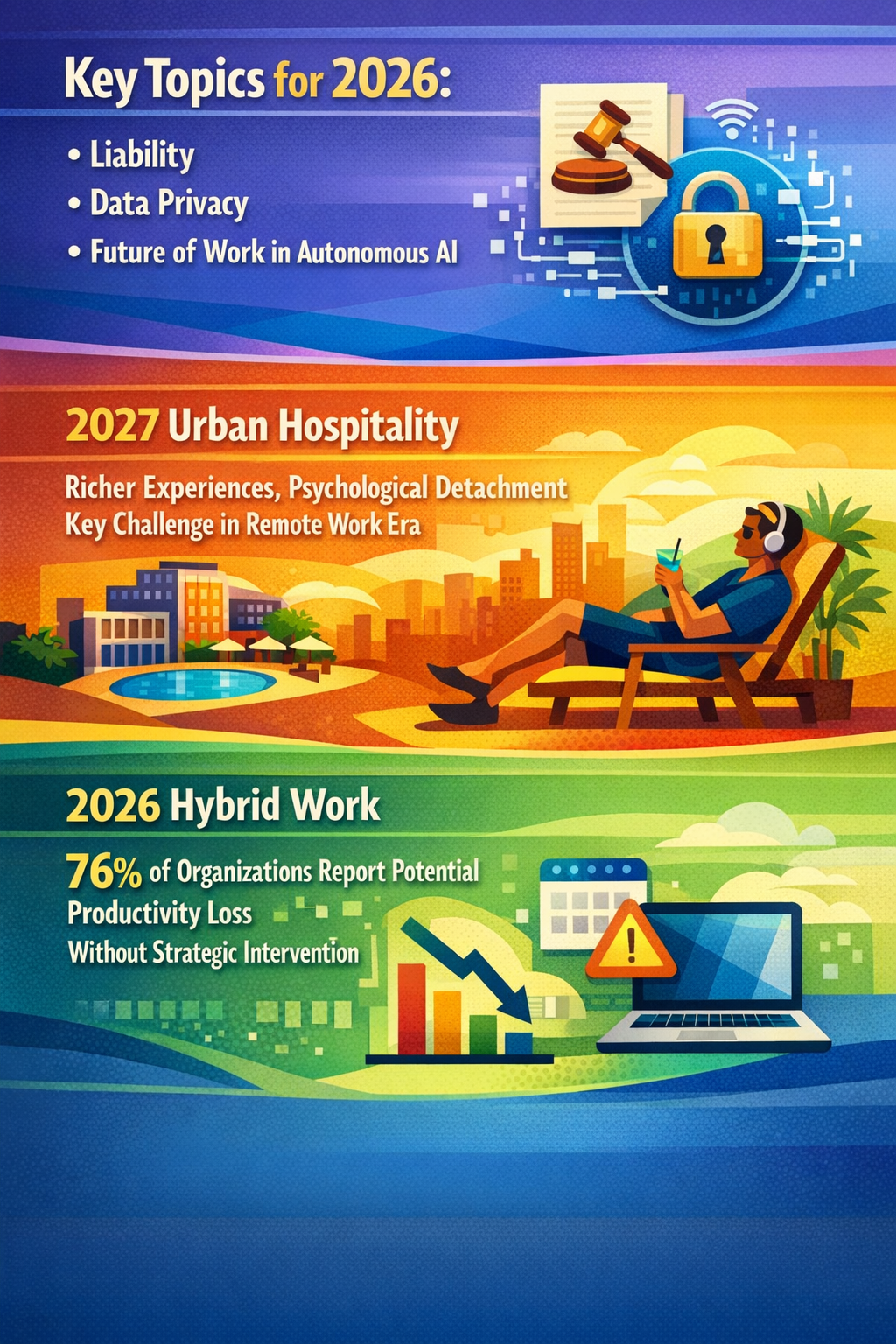
Cryptographically Verified Worker Autonomy: The Understated Wildcard in Future Work Landscapes
Emerging decentralised identity technologies intertwined with workforce digitisation are quietly defining a new paradigm of worker autonomy and skills credentialing. As hybrid work, remote mobility, and workforce segmentation accelerate, cryptographically secured personal skill provenance could reshape employer-employee power dynamics, industrial structures, and labour regulatory frameworks within the next two decades.
While the Future of Work discourse heavily emphasises hybrid models, remote work preferences, and digital tools, a less visible yet potent wildcard is the rise of decentralised verifiable credentials that empower workers to control their skills data and work conditions. This weak signal could challenge incumbent hiring practices, reskill investments, and capital allocation strategies by decentralising validation and enabling frictionless cross-border work. Decision-makers must consider the structural impacts of such autonomy on labour markets, regulatory compliance, and industrial organisation by 2030–2040.
Signal Identification
This development qualifies as a wildcard due to its disruptive potential and current under-recognition. Decentralised autonomous identity (DAI) and verifiable credentials technologies are nascent but poised to intersect with evolving hybrid work preferences and global remote mobility. The time horizon is primarily 10–20 years, given ongoing infrastructural and regulatory maturation processes. Plausibility is assessed as medium, considering technological feasibility but uncertain regulatory acceptance and adoption speed. Primary sectors exposed include professional services, technology, education, labour markets, cybersecurity, and regulatory governance.
What Is Changing
Across the Future of Work landscape, hybrid work adoption is consolidating, with increasing portions of the workforce expressing preferences for remote or cross-border employment arrangements (Surveymonkey 30/03/2024). This results in demographic shifts influencing regional labour pools as remote-capable workers relocate globally (The Lat Investor 12/02/2024). Meanwhile, digitisation of workspaces complements the rising hybrid trend through increased reliance on networked and Internet of Things (IoT)-enabled infrastructures necessitating robust cybersecurity and software-defined wide-area networking (SD-WAN) services (Market Data Forecast 01/03/2024).
However, beneath these visible shifts lies an under-explored inflection: a move towards decentralised control over worker credentials and identity. Traditional employment models rely on central institutions—employers, educational bodies, or government certification agencies—to validate skills and track human capital. Emerging blockchain-based verifiable credentials and cryptographically secured identities enable workers to maintain ownership over their skills and work history, verified by trusted issuers yet independently controlled by the individual. This represents a fundamental alteration from institution-centric to individual-centric labor credentialing mechanisms.
The implications tie closely to the ongoing demographic and psychological detachment trends observed in remote work staycation dynamics, where physical dislocation requires trust and transparent validation increasingly independent of proximity or single employer ecosystems (Nano Banana Magazine 15/01/2024). The focus on opportunity equity in hybrid work also demands reassessment of how access and recognition happen remotely, amplifying the need for decentralized, auditable, and portable skills ledgers (Vocal Media 22/02/2024).
Disruption Pathway
The development of cryptographically verifiable credentials embedded in decentralized identity systems may escalate through several connected dynamics. First, acceleration conditions include increased pressure from geographically dispersed remote workers demanding portable recognition of skills beyond employer boundaries, alongside rising calls for transparent diversity, equity, and inclusion (DEI) metrics linked to provable skill and opportunity equivalence (Vocal Media 22/02/2024).
As trust frameworks and standards evolve, centralized hiring and credentialing intermediaries face stresses from disintermediation risks. Employers and educational institutions may need to cede control over certification validation, altering power asymmetries. Such a shift could usher in a decoupling of the traditional employment contract, enabling more fluid engagements with multiple employers or decentralized autonomous organisations (DAOs). This would necessitate adaptations in labour law, collective bargaining, and compliance governance to accommodate cryptographic proof of work experience and competencies, potentially transforming industrial relations from static to dynamic reputational models.
Feedback loops may emerge as validated decentralized credentials improve matching efficiency between worker capabilities and task requirements, potentially reducing mismatch costs and reskilling inertia. However, opacity, digital divides, or governance gaps could cause unintended social stratifications, complicating regulatory oversight. The need for interoperable yet privacy-preserving standards is critical; dominant industry bodies and policy makers may be compelled to harmonize cross-jurisdictional labour identity frameworks, shifting regulatory approaches from input-based audits to outcomes-focused, data-driven supervision.
Why This Matters
For capital allocators, this signal portends shifts in human capital investment strategies. Firms may reprioritize spending from internal training towards modular credential acquisition platforms and ecosystem participation. Geographies that enable seamless decentralized skills verification infrastructures are likely to attract more distributed labour, affecting real estate, infrastructure, and local economic policies.
Regulators face pressures to create agile labour standards that reconcile decentralized worker verification with social protections. Compliance frameworks based on physical presence or fixed contracts might become obsolete, calling for innovation in digital labour rights enforcement. Industrial strategy must also consider how to nurture ecosystems enabling verifiable worker autonomy while safeguarding against skills fraud and exclusion risks.
Competitive positioning will hinge on whether organisations adopt and integrate decentralized credentialing early, thus gaining access to broader talent pools and improved agility in workforce sourcing and deployment. Supply chain resilience could improve by dynamically matching specialized skills with project needs globally, but may also introduce new liabilities in workforce verification provenance and attribution.
Implications
This development might catalyse structural change by fracturing the centralized systems controlling worker identities and skill certifications, enabling a shift towards peer-to-peer, interoperable credential economies. It could likely facilitate more fluid labour markets, expanding gig and project-based engagements beyond traditional geographic and institutional constraints.
However, this is not mere incremental change in remote work or hybrid office models; it is a foundational reconfiguration of trust and certification in labour markets. It is important to distinguish that this should not be confused with simple digital upskilling or HR IT upgrades—these lack the cryptographic and decentralization elements that empower worker autonomy and verifiable portability.
Competing interpretations may argue that incumbent institutions will resist or co-opt these technologies, limiting real-world impact or confining them within controlled certifications. Others might challenge scalability given complexities in regulatory harmonization and universal standards adoption. Nonetheless, the underlying technology trajectory and demographic demand patterns suggest this wildcard warrants serious strategic attention.
Early Indicators to Monitor
- Proliferation of blockchain-based verifiable credential pilots in government and corporate HR systems
- Standard-setting activity in decentralized identity and credentialing organizations (e.g., W3C Verifiable Credentials, Decentralized Identity Foundation)
- Regulatory consultation documents on digital worker identity and cross-border labour recognition
- Growth in venture capital investment into decentralized identity startups targeting workforce applications
- Corporate procurement trends favoring identity-agnostic hiring platforms and skills affinity scoring tools
Disconfirming Signals
- Stalled or fragmented regulatory progress preventing interoperable credential standards
- Widespread cybersecurity breaches undermining confidence in decentralized identity systems
- Entrenched employer resistance maintaining reliance on traditional centralized credentials
- Insufficient digital infrastructure in key labor markets limiting access to decentralized systems
- Negative social or legal backlash against disintermediated labor validation models
Strategic Questions
- How can capital deployment strategies hedge for or capitalize on decentralized skills verification infrastructure development?
- What regulatory frameworks can balance worker autonomy with societal protections amid decentralized credential adoption?
Keywords
Future of Work; Decentralized Identity; Verifiable Credentials; Hybrid Work; Labour Regulation; Skills Certification; Remote Work; Cybersecurity; Industrial Strategy; Capital Allocation
Bibliography
- The next reason to be optimistic is that 2026 is forcing a more honest conversation about hybrid work and opportunity. Vocal Media. Published 22/02/2024.
- By 2027, urban hospitality and local experience infrastructure will be substantially richer; the structural challenge of staycations will be psychological detachment in an era of remote work, not activity scarcity. Nano Banana Magazine. Published 15/01/2024.
- The rising adoption of hybrid work models, the proliferation of IoT devices, and the need for enhanced cybersecurity measures are anticipated to continue to fuel the demand for SD-WAN services in the Europe over the forecast period. Market Data Forecast. Published 01/03/2024.
- Four in ten (38%) workers say their ideal work arrangement has seen a post-pandemic shift. 23% of American workers prefer more opportunities for remote work. 14% of American workers prefer more in-person opportunities. 37% would work remotely from another country if their employer allowed it. Surveymonkey. Published 30/03/2024.
- The specific demographic shifts most affecting prices in Patagonia include Bariloche's population growing at about 2.2% annually, an influx of retirees seeking mountain lifestyle, and young families relocating for remote work opportunities. The Lat Investor. Published 12/02/2024.